|
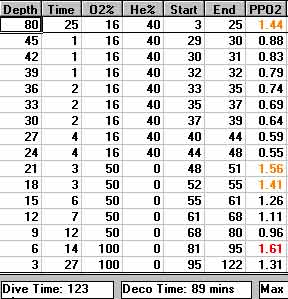
DecoPlanner from GUE uses a
Buhlmann algorithm with Gradient Factor method overlapped.
In This example the GF lo factor is 30 and GF Hi is 80
These are popular parameters, better suited to nitrogen/oxygen dives
A better combination for trimix would be GF lo 20 and High 65.
The immmediate descent function is in use making the overall length
of the decompression acceptable.
GF hi should be lowered to 75 to lengthen the shallower stops in
this example |
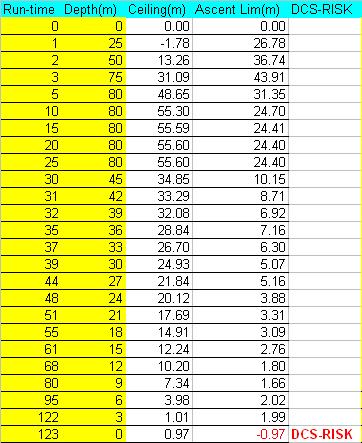 |

GAP software again uses a Buhlmann style algorithm
with Gradient Factor overlay.
The Gradient Factors are set Lo 30 Hi 80
Analysis of this profile shows a shallower first stop than before,
possibly a little too shallow
The ascent ceiling is followed more closely than Decoplanner.
The time spent in the shallows, borders insufficient.
By dropping the GF High with this program to 60, a more conservative
approach can be followed
This program should be used with high conservatism values, or damage
to slow tissues is possible. Pocket PC version gives more
conservative results |
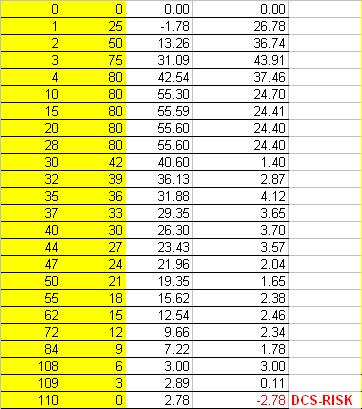 |
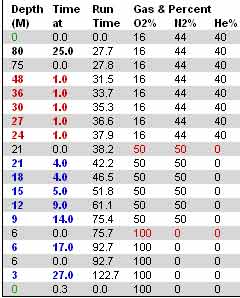
Abysmal Products (ironic) uses a proprietary set of
values. This example uses the Abyss 120 algorithm to give this
typical Bend and Mend schedule. The fast tissue stops are too
short. Stop time increases dramatically to undo the earlier damage.
This method only sometimes works. A Heads or Tails decompression
outcome is likely! Expect to feel tired (at least) after this
schedule. |
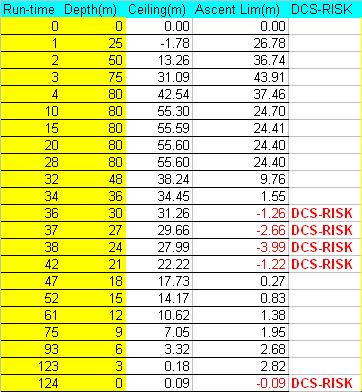 |
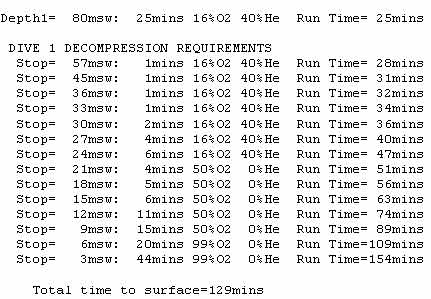
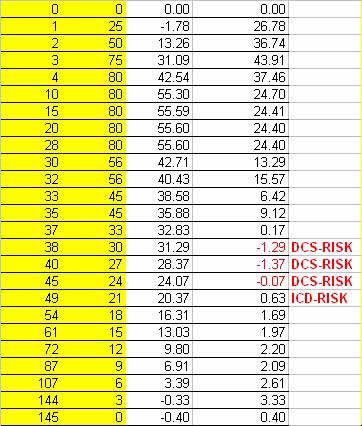
Older version of Proplanner (pre 2min deep stops)
uses Buhlmann style values modified with Pyle deep stop method. This gives acceptable ascent schedule
for this depth/time. The
program is user friendly and usefully conservative. The
decompression analysis gives no warnings at all. |
 |
|
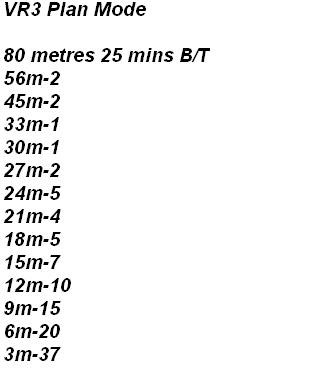
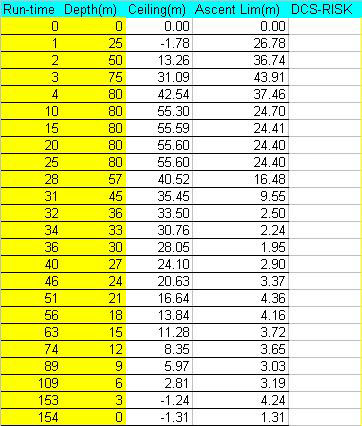
VR3 dive computer in plan mode. This computer inserts
mandatory 2 minute deep stops at Pyle stop depths. This method adds
conservatism, compared with earlier releases of Proplanner. The
extra time in deep water does however trigger a counter diffusion
warning at gas switch. A concern for open circuit divers also closed
circuit divers switching to bail out. Add helium here or increase
pre switch stop time or reduce bottom time. |
 |
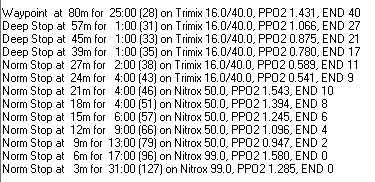
Zplanner has been withdrawn from
circulation, but has a wide user base. The deeper stops are still ongassing
the diver with little redress in the shallows This profile shows a
typical
Bend and Mend schedule. The software interface is very easy to use. |
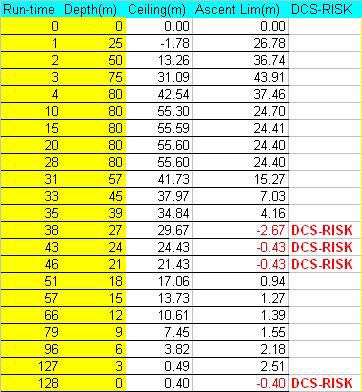 |
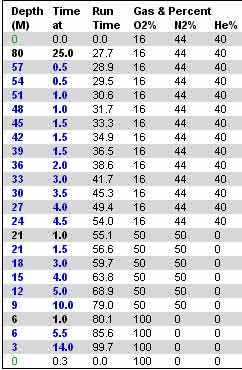
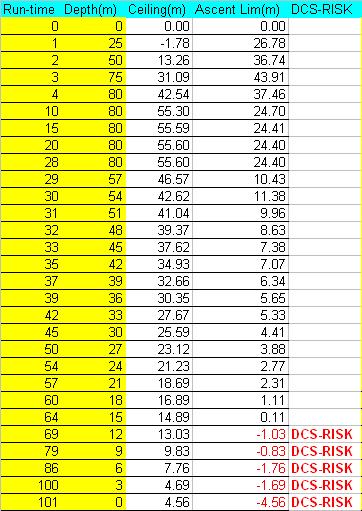
Another Abysmal diving product. RGBM algorithm in
use. This method gives a plethora of deep stops, most in the on
gassing range. Slow tissues are poorly taken care of. Type 1
decompression sickness highly likely. |
 |
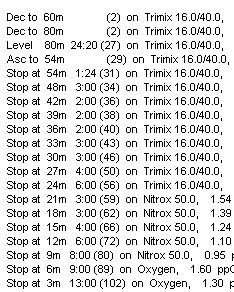
VPM algorithm in use.
VPMb with nominal conservatism gives very similar results to RGBM
above This method gives a rake of deep stops, most in the on
gassing range. Slow tissues are poorly taken care of. Type 1
decompression sickness highly likely. |
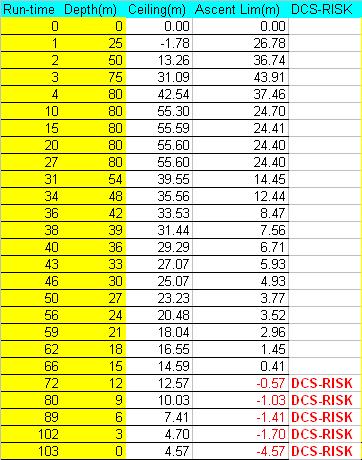 |
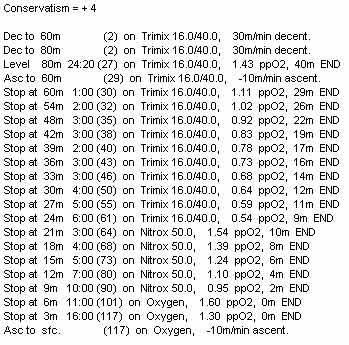
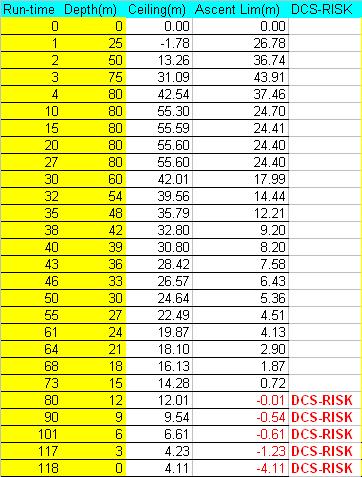
VPM algorithm in use.
VPMb with level 4 conservatism adds only small amount of
conservatism compared to nominal level This method gives a plethora
of deep stops, many in the medium/slow tissue on gassing range. Slow tissues are poorly
taken care of. Type 1 decompression sickness highly likely unless shallow stops are lengthened |
 |
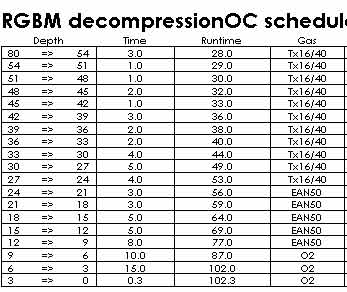
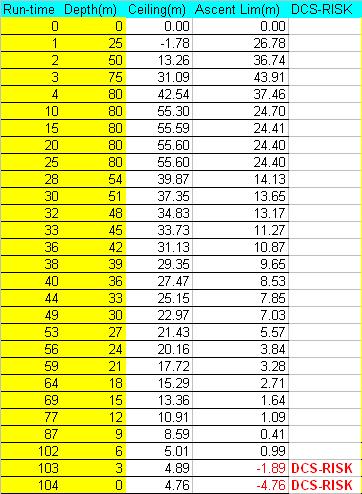
Gap RGBM. Gives ascent times very similar to VPMb and
Abyss RGBM, but as you will see is the most aggressive with shortest
time to surface. Repetitive dives using this plan is highly likely
to give undesirable results.
Pocket PC version more conservative |
 |